Water Spots on Your Car in Houston: What to Do Before You Scrub
- Home
- Car Care Tips
- Water Spots on Your Car in Houston: What to Do Before You Scrub
You wash your car, step back to admire the finish, and notice pale rings still sitting on the hood. If you have spotted water spots on your car in Houston, scrubbing harder may seem like the obvious next step. A more careful approach starts with understanding what remains on the surface.
Some marks are deposits left behind when water evaporates. Others may involve changes to the finish that ordinary washing cannot remove. Knowing the difference helps you avoid unnecessary rubbing, unsuitable chemicals, and unrealistic expectations.
At Brio Hand Car Wash & Detail – Spring Branch, we help Houston drivers choose vehicle care based on their car’s condition. Here is what to consider before tackling stubborn water marks.
What Causes Water Spots on a Car?
Water can contain dissolved minerals or collect contaminants before it dries. As the water evaporates, material can remain behind as pale dots, rings, or cloudy patches.
Common situations include:
- Sprinkler overspray reaching a parked vehicle
- Rinse water drying before the vehicle is towel-dried
- Water droplets drying on warm exterior panels
- Rainwater collecting dirt and leaving residue as it evaporates
The appearance of a spot does not tell you everything about its severity. A light-looking ring can be stubborn, while some fresh residue may come away during appropriate cleaning.
Surface Deposits and Etched Marks Are Different
A surface deposit sits on top of the finish. Etching involves a change in the surface itself. Both may look like water spots, but they do not necessarily respond to the same treatment.
If a mark remains after washing, that does not automatically mean the paint is permanently damaged. It also does not mean another round of stronger scrubbing is the right answer.
The appropriate next step depends on the material, the condition of the finish, any existing coating or protective film, and how the marks respond to careful cleaning.
1. Start with a Gentle Wash
Before attempting spot treatment, remove loose dirt and road film. Rubbing a dusty panel can drag debris across the finish and create additional marks.
Work on a cool surface in the shade. Use a suitable automotive shampoo, clean wash tools, and the product manufacturer’s directions. Rinse thoroughly and avoid allowing shampoo to dry on the vehicle.
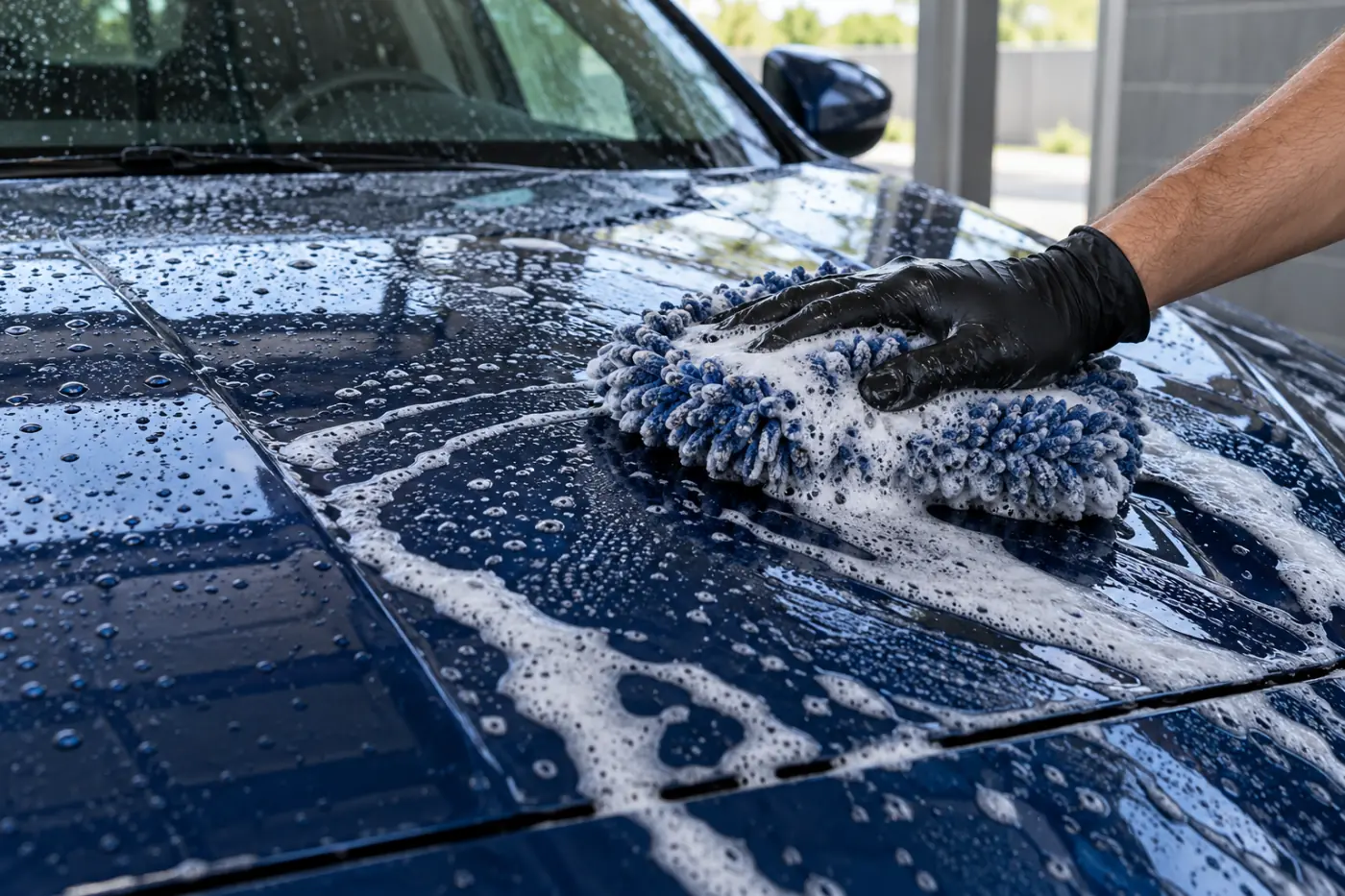
A maintenance wash is a useful first step, but it should not be treated as a guarantee that every mineral deposit or etched mark will disappear. Brio’s Q-Tip Hand Car Wash provides routine inside-and-out cleaning for regularly maintained vehicles.
2. Dry Carefully Before Checking the Finish
Remaining rinse water can make it difficult to judge the result. Dry the vehicle with a clean, plush microfiber drying towel using gentle pressure. Replace the towel if it becomes dirty.
Avoid rubbing repeatedly at one stubborn mark. Drying is intended to collect water, rather than grind away deposits.
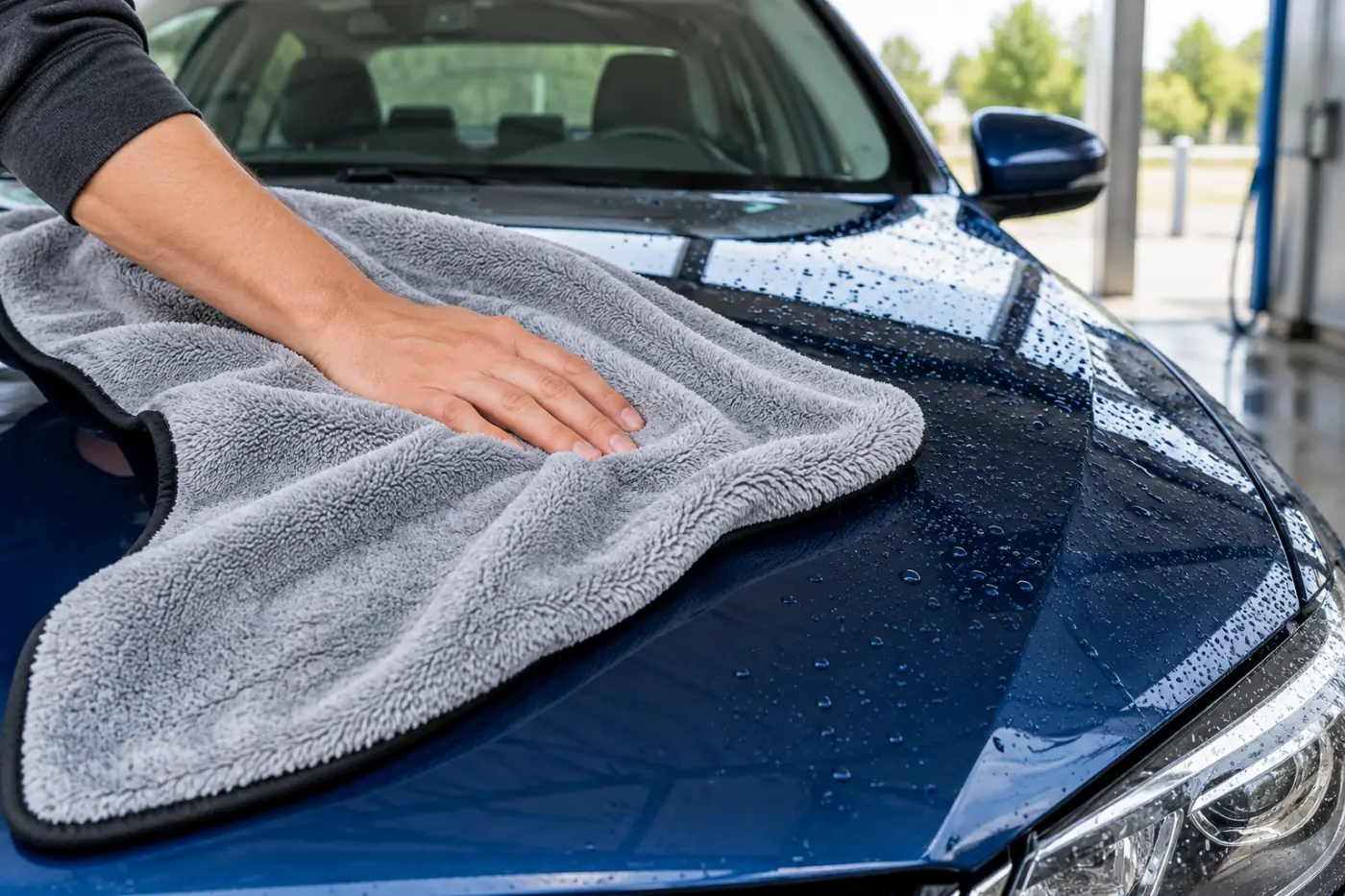
Once the surface is clean and dry, examine it from different angles in good lighting. Note whether the marks remain in the same locations and whether they affect paint, glass, trim, or several different materials.
3. Avoid Stronger Products Without Checking Compatibility
A product suitable for one surface may be unsuitable for another. Paint, glass, matte finishes, wraps, protective films, and coated surfaces can have different care requirements.
Before using any water-spot treatment:
- Confirm that the product is approved for the exact surface being treated.
- Check your vehicle, coating, wrap, or protective-film care instructions.
- Follow the label’s application, dwell-time, and removal directions.
- Test in a small, inconspicuous area when directed.
- Stop if you notice an unexpected change in color, gloss, or surface appearance.
Avoid household descalers, abrasive kitchen pads, and improvised chemical mixtures. Do not assume that a product described as a water-spot remover is compatible with every part of your vehicle.
4. Ask for an Assessment When Spots Remain
If marks remain after a careful wash and dry, an assessment can help determine whether additional cleaning or another treatment is appropriate.
Tell the team when you first noticed the spots, whether the vehicle was exposed to sprinklers, and which products you have already tried. Mention any ceramic coating, wrap, matte finish, or paint protection film.
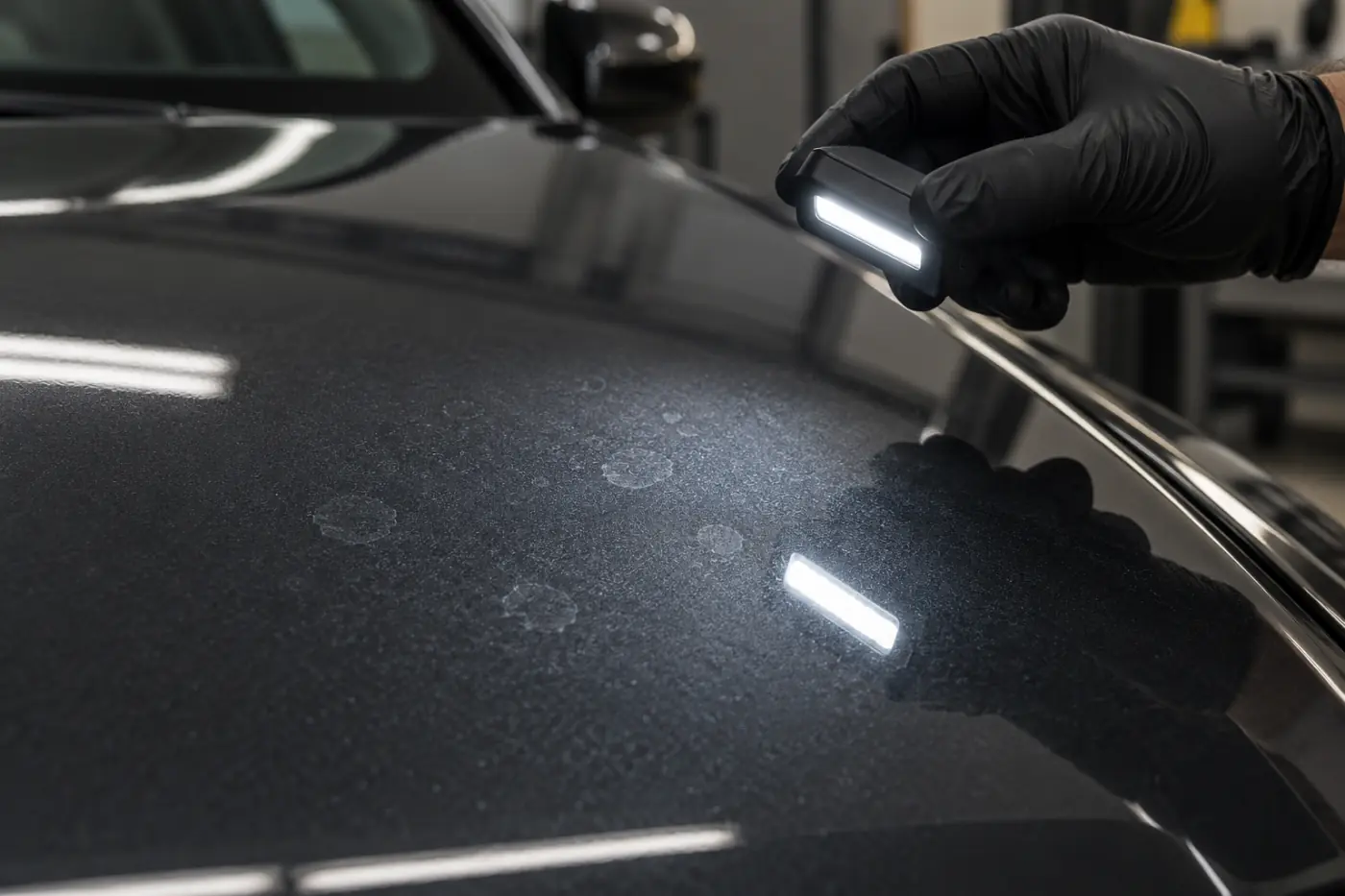
Some etched marks may require professional polishing or other specialist attention. Not every mark can be safely or completely removed. Ask what improvement is realistic before agreeing to additional work.
Not Sure What Your Car Needs?
Show Brio the areas that concern you before choosing a package. Ask whether the marks need attention beyond routine washing and what services are available for your vehicle’s finish.
VIEW SERVICES CONTACT BRIODoes Wax Remove Water Spots?
Do not assume that adding wax will remove existing deposits or correct etching. Waxing and correcting surface defects are different steps.
A suitable protective product can support ongoing exterior care, but it does not make a vehicle immune to water spots. Address existing concerns before applying protection, and follow the care instructions for your particular finish.
When comparing Brio’s wash and detailing options, describe water spots as a specific concern. Choosing a larger package alone does not guarantee that every mark will be removed.
How to Help Prevent Water Spots in Houston
A few practical habits can reduce repeated exposure and make water marks easier to manage:
- Avoid sprinkler overspray. Change parking positions when irrigation regularly reaches your vehicle.
- Wash on a cool surface. Choose shade and avoid washing hot panels.
- Dry after washing. Do not rely on air-drying to leave a spot-free finish.
- Use clean tools. Keep wash mitts and drying towels free of grit.
- Check new marks promptly. Address fresh residue with appropriate care rather than leaving it indefinitely.
For more ongoing exterior-care advice, read our guide to protecting your car’s paint in Houston.
Frequently Asked Questions About Car Water Spots
Will a regular car wash remove water spots?
A wash may remove some fresh residue, but stubborn mineral deposits and etched marks can remain. Inspect the finish after washing and drying before deciding what to do next.
Why are water spots more noticeable on a black car?
Pale residue can stand out against dark paint because of the contrast. Greater visibility does not automatically mean the damage is more severe.
Can I use the same remover on paint and glass?
Only if the product’s instructions specifically allow use on both surfaces and it is compatible with any coatings or films present. Check each material before applying a treatment.
Does a Full Detail guarantee water-spot removal?
No. A detailing package should not be assumed to include every form of deposit removal or paint correction. Discuss the marks with Brio before selecting a service.
Where is Brio Hand Car Wash & Detail located?
Brio Hand Car Wash & Detail – Spring Branch is located at 2036 Wirt Rd, Houston, TX 77055. Call 832-649-7626 to discuss your vehicle’s cleaning needs.
Give Your Car’s Finish the Right Attention
When you notice water spots on your car in Houston, start with careful cleaning and realistic expectations. If marks remain, ask about the appropriate next step before scrubbing harder or trying stronger products.
Brio Hand Car Wash & Detail – Spring Branch
2036 Wirt Rd, Houston, TX 77055
Phone: 832-649-7626
Wash with Brio. Real Hands. Real Shine.
EXPLORE SERVICES CONTACT BRIO